

Tackling injustice and inequality
The Justice and Equity Centre stands for a fair society, where nobody is left behind. We have a 40+ year track record of exposing, challenging and defeating injustice.
It takes skill and persistance to change unjust systems. It also takes financial backing to do the long-term work that needs to be done.
Lee's story: how we change unjust systems
The National Disability Insurance Scheme was created to give people with disability greater independence and a better quality of life. But many people have been let down by a complex bureaucratic system that denies them the support they need.
In 2019, the Justice and Equity Centre was asked to help make the NDIS fairer and more effective. We brought together disability representative organisations to analyse where NDIS laws and decision-making were failing and identify opportunities for systemic changes to improve policies and practices.
We were successful in defending the NDIS from a range of regressive changes and securing important reforms. Then in 2024, we had a significant win. New legislation clarified that decisions about funding NDIS supports must take a ‘whole of person’ approach to assessing a person’s needs.
Despite this, we continued to see funding decisions made with a narrow view of disability, with many participants missing out on supports they were entitled to. The reform we had all fought so hard for was not being properly applied.
Then Lee Eastham was referred to us for help.
Lee lives in regional Victoria and receives NDIS support for his vision impairment. Because of that impairment, he cannot drive. Public transport in his area is limited and town is a few kilometres away, too far for him to walk. But Lee can safely ride a mobility scooter, which can allow him to travel to the shops, attend medical appointments and visit family and friends.
When he asked for NDIS funding for the scooter, Lee was turned down.
The agency that administers the NDIS argued Lee needed the scooter because of mobility issues, not because of the vision impairment that gave him NDIS access. It was a narrow, bureaucratic approach that denied common sense.
‘It made life a lot tougher. I live on my own, and a scooter can make me a lot more independent instead of relying on people to drive me around, which I hate doing,’ says Lee.
Lee got the decision reviewed at the Tribunal and won. But the agency took the case to the Federal Court and Lee sought our help.
We argued that Lee’s vision impairment only had to be one cause of his need for the scooter, even if other challenges play a role, like his limited mobility and the lack of public transport where he lives.
The Federal Court agreed. Lee got his mobility scooter. And the case confirmed that the ‘whole of person’ approach, shaped through years of community advocacy and law reform, had to be reflected in NDIS decision-making.
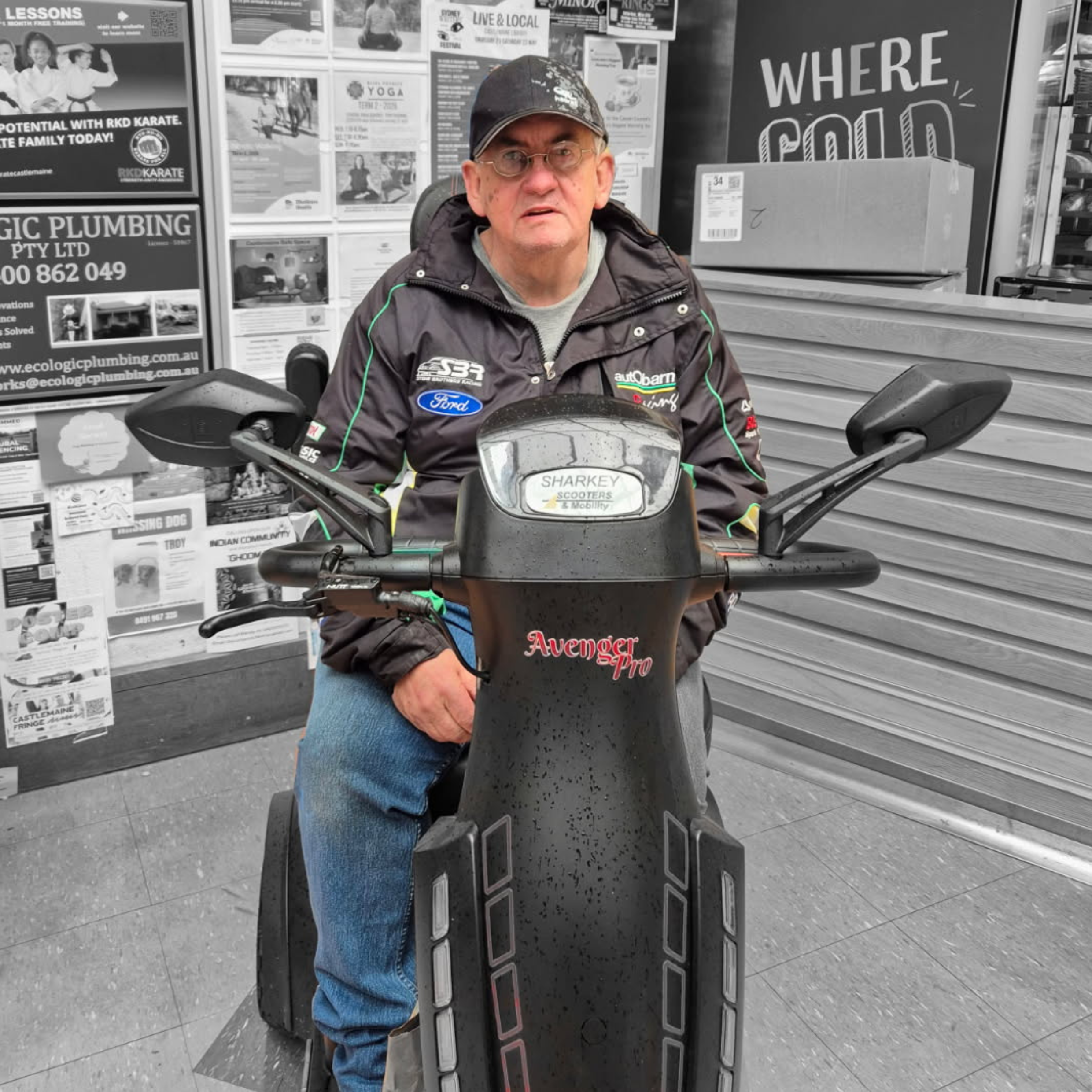
‘I reckon it’s absolutely brilliant that someone else can benefit from what I’ve done. Knowing that it’s going to help other people is a real relief. It’s not just me who needs it.’ – Lee Eastham

